
A classic Western Slope summer afternoon can change in the blink of an eye. One minute you’re enjoying the sunshine over Grand Junction or Palisade, and the next, a dark wall of clouds rolls off the mesa, unleashing a torrential downpour.
During these sudden cloudbursts, your home relies entirely on one line of defense to handle the deluge: your gutter system.
When functioning properly, gutters are the unsung heroes of your home’s exterior. But when caught off guard by severe weather, a sudden gutter failure from heavy rain can turn a routine storm into a stressful household emergency. If water can’t exit your roof properly, it quickly causes drainage issues that threaten your roof, siding, and even your foundation.
At Bros Roofing, we want to help our neighbors stay ahead of the weather. Let’s look at exactly why gutter systems fail when it pours, the hidden damage it causes, and how to protect your home before the next storm rolls in.
Key Takeaways
- The Overflow Trigger: Sudden downpours instantly expose hidden clogs, improper grading, and joint separations.
- The Roof Threat: When downspouts back up, they force dangerous roof water to back up directly under your shingles.
- Proactive Upkeep: Regular maintenance and seamless upgrades keep your drainage system clear and running on schedule, every time.
If you’ve noticed your gutters overflowing during recent storms, the team at Bros Roofing is here to provide honest answers and clear solutions.
The Main Culprits Behind Heavy Rain Gutter Failure
Out here in Colorado, a gutter system rarely fails because of the metal itself. Failures happen when a sudden surge of water exposes hidden vulnerabilities.
When a downpour hits, several common issues come to a head simultaneously.
Debris Clogs and Gutter Gardens
It doesn’t take a massive tree branch to cause a bottleneck. Leaves, pine needles, dirt, and bird droppings accumulate slowly over the seasons. When a downpour hits, all that loose debris is swept instantly toward the downspout opening, forming a solid plug. When water cannot flow through the downspouts, it creates immediate overflow drainage issues, spilling over the front and back edges of the gutter channel.
Improper Slope or Pitch
Gutters look straight from the driveway, but they are actually installed with a slight downward angle, ideally a quarter-inch of drop for every 10 feet of piping. If the slope is too flat, water pools in the middle of the run. During a heavy storm, standing water cannot drain fast enough, causing the entire channel to fill and overflow like a bathtub.
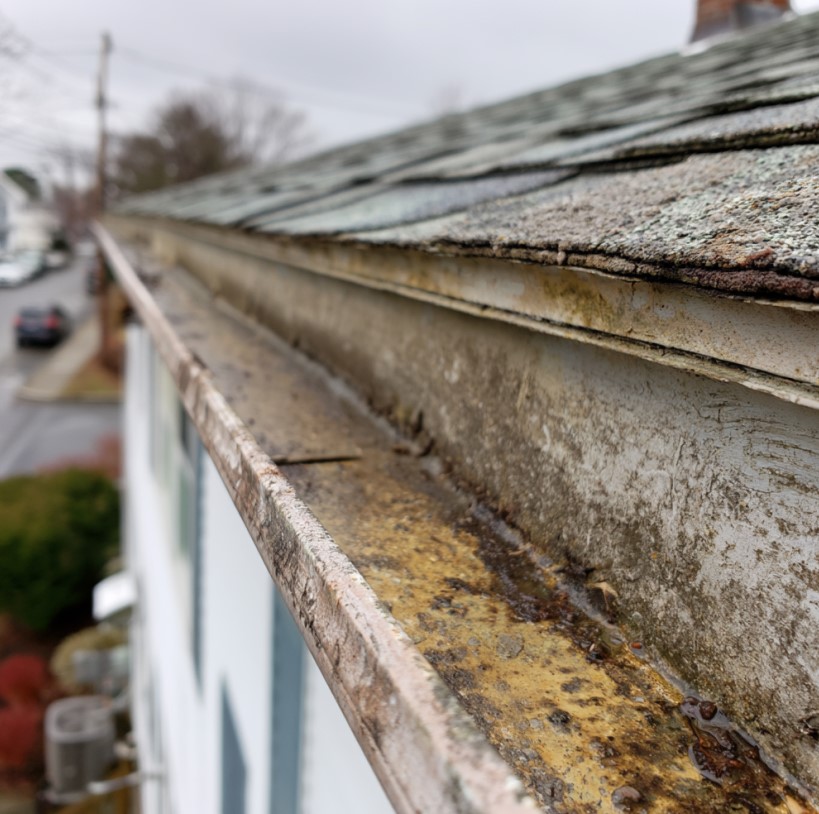
Gutter Joint Separation
Sectional gutters are joined at the seams with caulks, glue, or rivets. Over time, the sheer weight of trapped water and debris puts immense structural strain on these joints. Under the sudden weight of heavy storm runoff, these weak seams can pull completely apart, dumping cascades of water directly next to your home.
Structural Fallout: The Danger of Roof Water Backup
The biggest misconception about gutter failure is that it’s only a ground-level problem. While pooling water next to your foundation is serious, what happens at the roofline is often far more destructive.
When a gutter fills to the brim, the water doesn’t just spill over the front edge toward your landscaping. It also flows over the back edge.
This causes a critical roof water backup. The trapped rainwater rises high enough to submerge your fascia boards and soak into the lower edge of your wooden roof decking. Because water naturally flows along the path of least resistance, it slips right underneath your starter shingles.
Once moisture gets beneath the shingles, it begins a predictable path of storm runoff damage:
- Insulation Spoilage: Water drips into the soffits, soaking your attic insulation and destroying its energy efficiency.
- Fascia and Soffit Rot: Constant moisture softens the wood framing along your roofline, inviting pests and structural mold.
- Siding Discoloration: Sheets of overflowing water run down your exterior walls, cracking paint and leaving unsightly stains.
DIY vs. Professional Gutter Care: What Western Slope Homeowners Need to Know
When your gutters fail during a storm, the temptation to grab a ladder and fix it yourself is strong. However, safety and thoroughness should always come first.
The True Risks of DIY Maintenance
Scooping out debris seems simple, but climbing ladders on wet, unstable ground during or immediately after a Colorado storm is incredibly dangerous. Furthermore, a quick cleanout often misses deeper structural issues, such as a failing slope or a loose, hidden hanger. You might clear the leaves but completely miss the fact that your gutter is pulling away from the fascia board.
The Value of Certified Craftsmanship
Hiring local experts you can trust ensures the job is done safely and correctly. Professional roofers don’t just clear debris; they inspect the entire system’s structural integrity.
At Bros Roofing, our gutter assessments cover:
- Fastener Security: Tightening loose screws and replacing missing hangers.
- Seam Sealing: Repairing separated joints with heavy-duty rivets and commercial-grade sealants.
- Pitch Realignment: Re-pitching sagging sections to the perfect angle for maximum water velocity.
How to Prevent Clogs and Storm Runoff Damage for Good
You can’t stop a Western Slope downpour, but you can ensure your drainage system is entirely prepared for it. Protecting your home means taking a proactive approach to maintenance.
- Schedule Cleanings Twice per Year: We highly recommend cleaning your system in late spring to prepare for summer cloudbursts, and again in late fall to clear out dropped leaves before winter snow sets in.
- Clear the Downspouts: Always flush downspouts with a hose during cleaning to ensure the underground exit lines aren’t blocked.
- Consider Upgrading to Seamless Gutters: Traditional sectional gutters have dozens of seams that catch debris and cause leaks. Seamless gutters are custom-fabricated from a single piece of metal, eliminating the main structural failure points entirely.
Catching minor drainage problems early keeps maintenance simple, highly affordable, and stress-free. At Bros Roofing, we treat your home like our own, confirming your gutters and roof deliver long-term protection through every season.
If you want to ensure your home is ready for the next big storm, call Bros Roofing to protect your home this season.
Heavy Rain Gutter Failure FAQs
Why do my gutters overflow even when they look completely clean?
If your gutters are free of leaves but still overflow during heavy rain, you are likely dealing with an improper slope issue or undersized gutters. If the pitch isn’t slanted correctly toward the downspouts, water will pool and spill over. Additionally, older 4-inch gutters often lack the capacity to handle intense, modern Western Slope downpours.
Can overflowing gutters cause a leak inside my living room?
Yes. When a roof water backup occurs, water rises over the back of the gutter and seeps under the shingles, rotting the roof deck. From there, it travels along rafters and ceilings, eventually showing up as drywall stains or water drips inside your home.
How far should downspouts extend away from a house?
To prevent foundation damage and basement flooding, downspouts should direct storm runoff at least 3 to 5 feet away from your home’s foundation. In areas with poor soil drainage, installing flexible extensions or underground bubbler pots is highly recommended.
Does homeowner’s insurance cover gutter repairs after a heavy rainstorm?
Generally, no. Insurance covers sudden, accidental wind or hail damage, but gutter overflows caused by debris accumulation, aging sealants, or lack of maintenance are classified as wear and tear, which is the homeowner’s responsibility.
Is a damp or musty smell upstairs related to gutter failure?
It can be. If overflowing water has been backing up under your lower shingles consistently, it will saturate your attic’s wooden framing and insulation. This trapped moisture quickly breeds mold, leading to a distinct, earthy odor in your attic or upper floor.
Stay Ahead of the Next Western Slope Downpour
Heavy rain doesn’t have to become a costly surprise. A well-maintained gutter system protects your roof, siding, foundation, and everything inside your home by directing water safely away before it has the chance to cause damage. Addressing small issues like loose fasteners, clogged downspouts, or improper gutter pitch today can help you avoid expensive repairs after the next summer storm.
If your gutters overflow, leak, sag, or simply haven’t been inspected in a while, now is the ideal time to have them evaluated. At Bros Roofing, we provide honest inspections, expert gutter repairs, seamless gutter installations, and complete roofing solutions designed for the unique weather challenges of Colorado’s Western Slope.
Schedule your free quote with Bros Roofing today and make sure your home is ready before the next sudden downpour arrives.