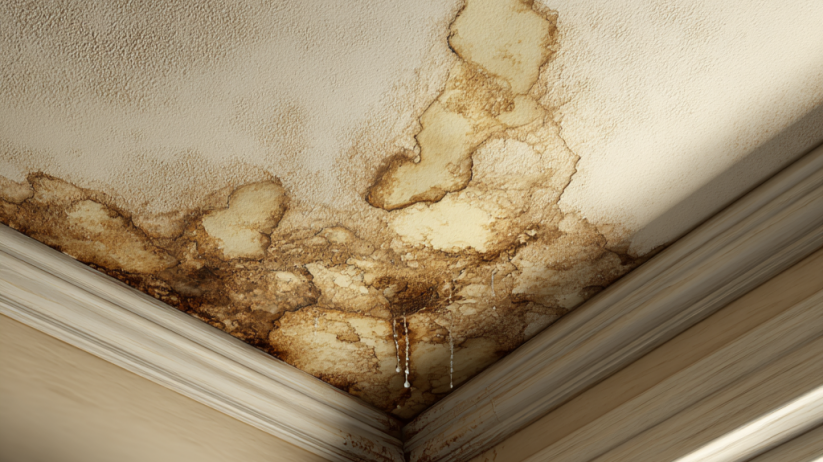
You’re walking through your living room in Grand Junction and glance up. There it is, a faint yellow ring spreading across the ceiling. It’s easy to dismiss ceiling water stains as cosmetic. But in many cases, they’re early roof leak warning signs.
On the Western Slope, shifting temperatures, hail, and wind can quietly create roof damage symptoms long before water drips. By the time you notice interior leak indicators, the problem may have been developing for weeks.
In this guide, you’ll learn what ceiling water stains actually mean, how to tell if they point to roof damage, and when to act. At Bros Roofing, we help homeowners protect their homes with clear answers and solutions built for Colorado weather.
Key Takeaways
- Ceiling water stains are often roof leak warning signs, not just cosmetic issues.
- Interior leak indicators usually appear after moisture has traveled through your roof system.
- Early inspections prevent small roof damage symptoms from becoming structural repairs.
If you’re unsure what that stain means, our local experts you can trust are here to help.
How Ceiling Water Stains Reveal Hidden Roof Damage Symptoms
Ceiling water stains form when moisture seeps into drywall and evaporates, leaving behind minerals and discoloration. But the stain itself isn’t the root problem; it’s the signal.
Most roof damage symptoms begin outside:
- Missing or bruised shingles after hail
- Cracked flashing around chimneys or vents
- Worn underlayment beneath aging shingles
- Ice buildup during freeze–thaw cycles
Water rarely drips straight down. It travels along the decking and rafters before pooling in one visible spot. That’s why ceiling water stains are considered interior leak indicators; they show where water settled, not necessarily where it entered.
On the Western Slope, temperature swings make this worse. Water enters a small crack, freezes overnight, expands, and widens the gap. Over time, roof leak warning signs become visible indoors.
Ignoring ceiling stains allows hidden moisture to affect insulation, framing, and even electrical systems.
Important Factors to Consider Before Addressing Ceiling Water Stains
Before repainting or patching drywall, pause. Fixing the stain without solving the source leads to repeated damage.
Here’s what to evaluate:
- Location Matters: Is the stain on the top floor ceiling? That increases the likelihood of roof damage symptoms.
- Recent Weather: Did it appear after hail, heavy rain, or snowmelt? Storm timing strengthens roof leak warning signs.
- Vent & Flashing Proximity: Stains near chimneys, skylights, or vents often signal flashing failure.
- Attic Conditions: Musty smells or damp insulation are interior leak indicators of active moisture.
- Roof Age: Shingle systems over 15–20 years old are more vulnerable to hidden roof damage.
Step-by-Step: How to Safely Check Roof Leak Warning Signs
Step 1: Inspect from the Ground
Walk around your home. Look for missing shingles, dented vents, or sagging sections. Use binoculars instead of climbing.
Step 2: Check the Attic on a Dry Day
Bring a flashlight. Look for darkened decking, rusted nails, or damp insulation. These are strong interior leak indicators.
Step 3: Examine the Stain’s Pattern
Ringed, yellow-brown stains typically signal ceiling water stains from roof leaks. Soft drywall or bubbling paint indicates ongoing moisture.
Step 4: Document Everything
Take photos before any repairs. This helps with insurance documentation if needed.
What Ceiling Water Stains Say About the Condition of Your Roof
A Small Ring Can Signal a Larger Entry Point
A minor stain may reflect significant roof damage symptoms above. Flashing gaps or cracked shingles allow water entry during storms.
Repeated Stains Mean the Root Cause Was Missed
If ceiling water stains return after repainting, that’s a clear roof leak warning sign. Surface fixes never solve structural moisture issues.
Sagging Areas Suggest Structural Saturation
When drywall bows or softens, moisture may have saturated insulation and decking. This requires immediate evaluation.
Mold Odors Point to Ongoing Interior Leak Indicators
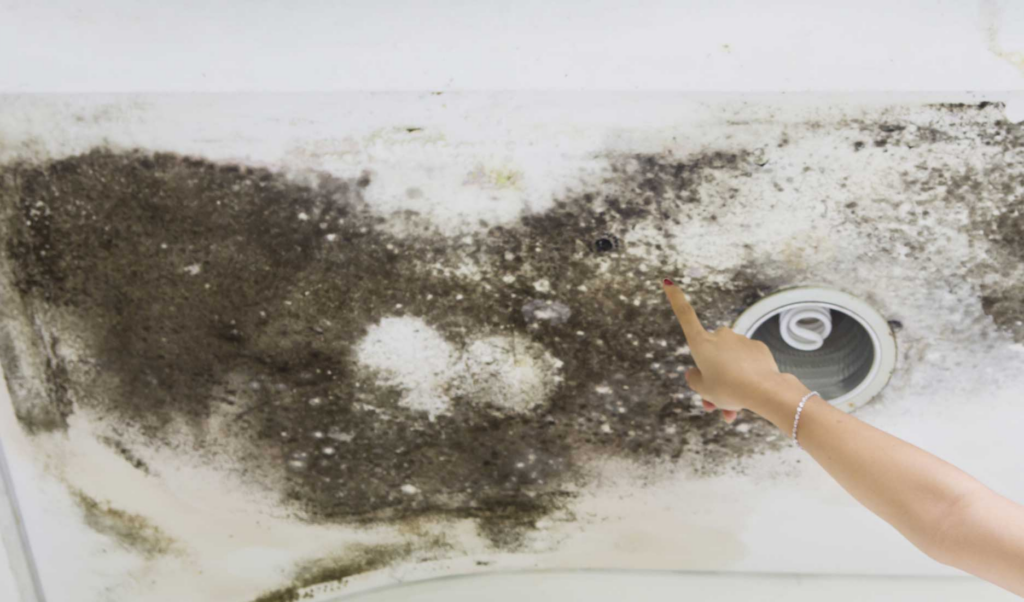
Persistent musty smells indicate trapped moisture. Mold growth often follows untreated roof damage symptoms.
At Bros Roofing, we evaluate the entire roofing system, shingles, flashing, decking, and ventilation, to deliver long-lasting solutions.
When Ceiling Water Stains Mean It’s Time to Call a Professional
Some stains may stem from plumbing or HVAC condensation. But if signs align with roof leak warning signs, storm timing, top-floor location, and attic moisture, it’s best to act quickly.
Early intervention protects insulation, drywall, and framing. Waiting often leads to higher repair costs and more complex fixes.
We treat your home like our own. That means honest assessments, certified craftsmanship, and repairs built for Colorado weather.