It usually starts small.
A little overflow during a rainstorm. A section of gutter pulling away just slightly. Maybe a drip you only notice when the snow melts in Grand Junction.
Nothing urgent, right?
The truth is, these small issues are often the beginning of bigger gutter damage effects. When gutters stop doing their job, water doesn’t just disappear; it starts working against your roof, your siding, and your home’s structure.
Here on the Western Slope, where we deal with snow, wind, and sharp temperature swings, even minor drainage issues can turn into gutter-related roof leaks faster than most homeowners expect.
At Bros Roofing, we’ve seen it firsthand across Montrose, Delta, and Clifton. What looks like a small gutter issue today can quietly lead to roof edge damage and long-term moisture problems.
Key Takeaways
- Gutter damage effects often start small but lead to larger roofing issues over time
- Poor drainage increases fascia water exposure and weakens roof edges
- Many gutter-related roof leaks begin with overflow, sagging, or clogged gutters
If you’ve noticed anything off with your gutters, it’s worth taking a closer look before it spreads.
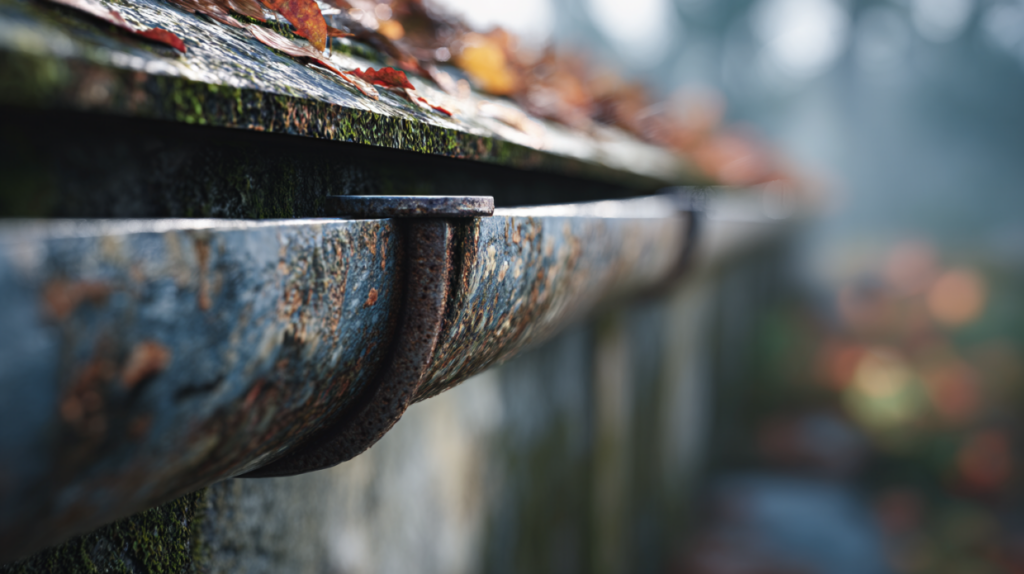
How Gutter Damage Effects Turn Into Roof Problems
Your roof sheds water. Your gutters control where it goes.
When that system works, your home stays protected. When it doesn’t, water starts going places it shouldn’t.
That’s where gutter damage effects come into play.
Clogged, sagging, or damaged gutters can cause:
- Water backing up under shingles
- Overflow running down siding and trim
- Constant fascia water exposure at the roof edge
- Standing water near the foundation
And here’s the part most homeowners don’t realize, these problems don’t always show up right away.
Water can sit, soak, and slowly affect the materials around it. Over time, that leads to soft wood, peeling paint, and eventually roof edge damage that requires repair.
In Colorado conditions, this process can speed up. Snow melts during the day, then freezes overnight. That cycle puts pressure on gutters and roof edges at the same time.
What starts as minor overflow can turn into repeated moisture exposure, and that’s when problems begin.
Why Roof Edge Damage Often Starts at the Gutters
Roof edges are one of the most vulnerable parts of your home.
They’re where shingles end, where water exits, and where gutters take over. If gutters aren’t working properly, the roof edge takes the hit first.
Overflow Creates Constant Fascia Water Exposure
When gutters clog or fill up, water spills over the front or back.
That water often runs along the fascia board, the wood that supports your gutters. Over time, repeated fascia water exposure can cause:
- Wood rot
- Paint failure
- Soft or weakened boards
Once the fascia weakens, gutters pull away more easily, making the problem worse.
Backed-Up Water Leads to Gutter Related Roof Leaks
When water can’t drain, it looks for another path.
That path is often under your shingles.
This is one of the most common causes of gutter-related roof leaks. Water pushes up beneath the roofing material, especially during heavy rain or snowmelt.
It doesn’t take a major storm. It just takes time and repeated exposure.
Sagging Gutters Increase Roof Edge Damage
Gutters are designed with a slight slope to keep water moving.
When they sag, water collects instead of flowing. That extra weight pulls on the fascia and keeps moisture sitting in place longer than it should.
This combination leads to faster roof edge damage, even if the roof itself is still in good condition.
The Most Common Signs of Gutter Damage Effects
Most of the time, your home will give you early clues.
Here are the signs we recommend Western Slope homeowners watch for:
- Overflow during rain: Water spilling over the gutter edge instead of flowing through
- Sagging sections: Gutters pulling away or dipping in the middle
- Water near foundation: Pooling or erosion near your home
- Peeling paint at eaves: A sign of ongoing fascia water exposure
- Staining or streaks: Water running down the siding or trim
- Recurring leaks near roof edges: Often tied to gutter-related roof leaks
If you notice one of these, it doesn’t mean you need a full replacement. But it does mean your system deserves a closer look.
Catching these early is one of the easiest ways to protect your home.
Why Minor Issues Turn Into Bigger Repairs in Colorado
Western Colorado weather doesn’t give your roof much of a break.
Between sun exposure, snow load, and freeze–thaw cycles, materials expand and contract regularly. That movement affects both your roof and your gutters.
Here’s how that plays out:
- A small clog becomes a repeated overflow
- Overflow becomes ongoing fascia water exposure
- Moisture weakens the roof edge
- Weak edges allow water to enter
- That leads to gutter-related roof leaks
It’s not one big event. It’s a series of small ones adding up.
That’s why we always tell homeowners, it’s easier to fix drainage early than deal with structural repairs later.
What to Do If You Notice Gutter Damage
You don’t need to overreact, but you also don’t want to ignore it.
Start with a simple check:
- Look at your gutters during the next rain
- Check for overflow or uneven flow
- Walk the perimeter and look for water pooling
- Inspect fascia for discoloration or soft spots
If everything looks normal, great. If something feels off, it’s worth getting a professional opinion.
At Bros Roofing, we take a full-system approach. That means we don’t just look at gutters or shingles; we look at how everything works together.
Because most gutter damage effects are part of a bigger picture.
How to Prevent Gutter-Related Roof Leaks
Prevention is straightforward and goes a long way.
- Clean gutters regularly: Especially after fall and spring storms
- Check downspouts: Make sure water is moving away from your home
- Watch for sagging: Address loose sections early
- Schedule inspections: Once a year or after major storms
- Fix small issues quickly: Minor repairs prevent larger damage
These steps don’t take much time, but they can protect your roof and your home for years.